Top Text to Image AI Tools in 2025

PicYou
Dec 2, 2025

In 2025, the ecosystem of text‑to‑image AI tools has become mature and highly diversified. For designers, content creators, e‑commerce practitioners, and even hobbyists, these tools allow a simple prompt — a phrase or sentence — to be transformed into a compelling visual. That means huge gains in efficiency, creativity, and output flexibility. In this article, we’ll review the most noteworthy tools in the market — including PicYou AI — and analyse their strengths, best‑use scenarios, and why they are worth your attention.

What Are Text-to-Image AI Tools?
Text‑to‑image AI tools are software platforms that convert written text (a "prompt") into images. Modern versions of these tools have significantly improved — able to produce:
High‑fidelity photorealistic images (people, products, scenery, etc.)
Illustrations, digital art, concept art, fantasy‑style visuals
E‑commerce product images, social media graphics, UI/UX mockups, banners
They drastically lower the barrier for producing visual content. You don’t need to hire a photographer or illustrator — a well‑crafted prompt can do the job. These tools are widely used for:
Product visuals for e‑commerce, ads, social‑media posts
Illustrations, concept art, and digital artwork
UI/UX design, banners, posters
Content creation, marketing materials, brand graphics
By enabling “text → image,” they empower creators without strong design or drawing skills to produce high‑quality visuals.
Leading & Popular Tools in 2025
Below are several of the most influential, widely adopted text-to-image (or more broadly, visual‑AI) platforms in 2025 — including PicYou AI.
PicYou AI
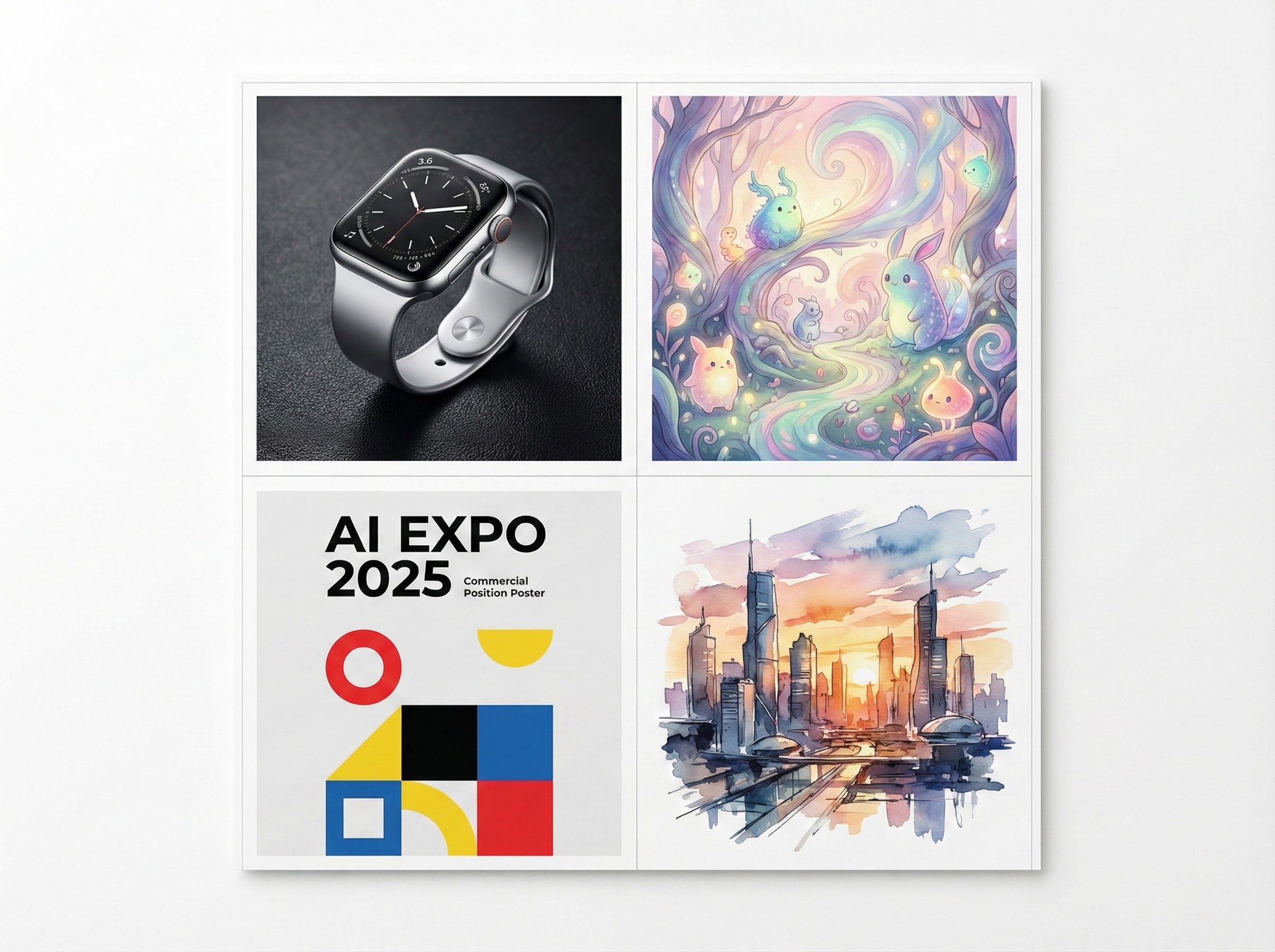
PicYou AI is a multi‑functional, all‑in‑one AI content generation platform that supports Text-to-Image, Image-to-Image, as well as video and animation generation.
Its target users are creators, content producers, designers, social‑media managers, and small teams or freelancers.
Advantages:
Easy to use and low barrier to entry — no need for local deployment or complex setup; everything runs online.
Versatile functionality — beyond image generation, it offers image enhancement, style transfer, expansion, and even video generation, filters, stickers, and other content‑creation tools.
Flexible subscription or credit‑based payment model, suitable for both small‑scale experiments and large‑scale commercial production.
Great for users who want to quickly generate content, visuals, or marketing assets without deep technical background.
Limitations / Considerations: Compared to some tools optimized for artistic fine‑tuning or highly stylized output, PicYou AI leans more toward “efficient production + practicality,” so it may be less ideal if your priority is fine‑tuned artistic style or heavy customization.
Best suited for: content creators, e‑commerce/product image generation, social media marketing visuals, small teams or freelancers, and anyone who needs to quickly produce varied visual or video assets.
In short, PicYou AI is a compelling choice if you want an efficient, all‑round platform to convert ideas into finished images or videos — especially for content‑driven projects.
Other Major Tools
Midjourney — excels at producing stylistic illustrations, concept art, and digital art through prompt-based generation. Great for artists, illustrators, and creative projects needing a distinct artistic flair.
Stable Diffusion (and its derivatives / self-hosted versions) — open-source, highly customizable, and ideal for users or teams who want full control over generation parameters, privacy, and flexibility.
Adobe Firefly — emphasizes commercial‑safe content generation. Well‑suited for brands, marketing teams, and businesses that need reliable, legally-safe visuals for professional use.
Emerging and hybrid tools — beyond pure image generation: many AI platforms are expanding into video generation, image-to-video conversion, animation, mixed media content, etc. This reflects the broader trend that “visual‑AI” now encompasses more than just static images.
Why This Matters — Especially for Your Context (PicYou AI / Your Projects)
Given that you previously mentioned you’re working on PicYou AI + related projects (e.g. your own image generator), integrating PicYou AI into your evaluation and comparison pool is highly meaningful:
Positioning & Benchmarking: PicYou AI represents a “practical, content-production oriented, user-friendly, multi‑functional” positioning — a viable reference point when you design or refine your own solution (e.g. Nano Banana Pro, Gemini 3 Pro).
Feature & Business Model Inspiration: PicYou’s blend of flexibility (image + video + varied outputs), ease of use, and credit‑or‑subscription billing is a robust model. You can draw inspiration for your own product’s UX, pricing structure, and target audience.
Reflecting Market Trends: The 2025 AI‑image ecosystem is not purely about artistic illustration — it’s about efficiency, scalability, content output, multi‑media integration, and accessibility for non‑experts. If your project aims to serve creators, businesses, or marketers, focusing on usability, speed, and broad functionality (like PicYou) is going in the right direction.
How Creators / Designers / Developers Should Choose & Use AI Visual Tools
When starting a new visual or content project, you might consider:
If you need quick, stable, low‑barrier output (images, graphics, or even short videos) → use PicYou AI (or a similar all‑in‑one platform).
If you aim for artistic style, creative illustration, or concept art → use Midjourney or a customizable tool like Stable Diffusion (especially if you want to fine-tune results).
If you require commercial‑safe, brand‑compliant, professional visuals → consider Adobe Firefly.
If you value full control, privacy, or the ability to self-host / customize → Stable Diffusion (local or self‑hosted) is suitable.
For maximum flexibility and combining different media types (e.g. static images, animations, video, enhancements) → combining multiple tools (e.g. PicYou AI for quick batch output + Stable Diffusion / other tools for fine‑tuning) might be optimal.
It’s also advisable to clearly define your goals and output requirements before selecting tools — whether you need realistic photos, stylized art, marketing graphics, e‑commerce product images, or mixed content (images + video + text overlays + branding).
Conclusion
In 2025, the world of text‑to‑image AI has evolved into a diverse, flexible, and mature ecosystem. From highly stylized art‑oriented platforms to open‑source, customizable models — and from simple image generation to full multimedia content pipelines — creators have more choices than ever before.
PicYou AI stands out as an important example of a practical, multi‑functional, user‑friendly, production‑oriented tool. If you are building or planning your own AI‑image generation product — as you indicated with your work — including PicYou AI in your competitive analysis and product roadmap is wise.
People Also Read
How to Create Engaging Videos from Images: A Beginner’s Guide
Turning a set of still photos into an engaging video is one of the easiest ways to make your content more dynamic
Learn More
How to Use AI to Transform Static Images into Dynamic Videos
Turning a single photo into a dynamic video used to require professional editing skills
Learn More
How to Turn Your Photos into Stunning Videos in Just a Few Steps
How to Turn Your Photos into Stunning Videos in Just a Few Steps
Learn More